Astrophysics to meteorological data scientist
My decision
Everyone has a different reason, motivation for the career path they chose. Through many conversations I came to understand that the most successful people are not the ones who always dreamed of having that career. Instead, they were the ones who made the right decision at the right time. Those that saw an opportunity they liked and took them.
For myself, I can say I am not one of those people. I had a very specific career in mind and I wasn’t letting go. The career was research in astrophysics, specifically I wanted to answer the understand the questions of the Universe, whatever those might be to a 7 year old.

1. Job security and eternal nomads
Throughout my education I stuck by my dream irrespective of the sacrifice I had to make. I did a physics bachelor in my country and moved to the neighboring countries for my masters in astrophysics. I moved countries frequently, so frequently that building deep social connections, that are the foundation for resilience, became impossible. Finally, I ended up in Austria, where I realised that pursuing my dream hasn’t given me the fulfillment I expected and going forward would require a price I was no longer willing to pay. Moreover the probability of securing a permanent position became too low. This realisation was heartbreaking for me and it has been a long journey accepting it.
2. Decline of science focus
Secondly, what started to sadden me deeply is the amount of non-science discussions and topics I saw happening around me. Over time I noticed that senior postdocs and professors would only discuss which topics would get them more funding and have less actual science discussions. I get that we need money to do our research, but when research suffers because of funding talks, you are doing something wrong. When discussing papers in preparation we didn’t talk about the weak points of the science or writing, no we discussed what will the referee say. It is hard for me to express how profoundly that saddened me, but then again, I was a PhD student I didn’t dare acknowledge I had these thoughts. I thought science was curiosity, and while there has to be some administrative discussions, which are essential when a group of people works together, they shouldn’t dominate the discussion time. One could say I became disenchanted with the academic environment that is becoming increasingly focused on numerology and ticking boxes instead of pushing the boundaries of our understanding.
3. Real world impact of astrophysics
During the Covid-19 lock downs I was frequently questioning the meaning and broader impact of my work on society. I know it is a cliche to ask “What is astrophysics even good for”, but when you are all alone for 24h a day 7 days a week months on end in a country you just moved to 6 months before your mind wanders in unexpected places. Of course I didn’t really allow myself to consciously think about it, I was nonetheless an astrophysics PhD student, my topic is something I should love above all else and unconditionally. So I just pushed the thoughts aside and soldiered on. Only they didn’t go away. To feel useful I volunteered for every activity I could, which of course took time away from research, but you know classes have to be taught, meetings organised and platforms for exchange of ideas made up. How exactly my path would develop had it not been for Covid, would I discuss my reservations with colleagues, would I publish more? would my extracurricular activities have bigger impact? I guess I will never know.

By the end of my PhD, I had seen 6 different institutes in 5 countries, through various projects. Needless to say I had a fairly good grasp of what I am no longer willing to compromise on both professionally and personally. So after receiving rejections from all astrophysics institutes I could see myself working at as a postdoc, I decided to end my astrophysics career.
Now what? I was maybe more prepared than average, but I still felt clueless about industry options. So I spoke to as many colleagues I know who had made the transition about their experience and the job application process. This was really helpful in focusing which areas of industry I would consider and how to first identify then phrase my competences. I also weighed importance of family and friends and my restricted options still got me a perfect job as a metrological data scientist with a machine learning focus.
Jobs in industry:
An efficiency focused approach
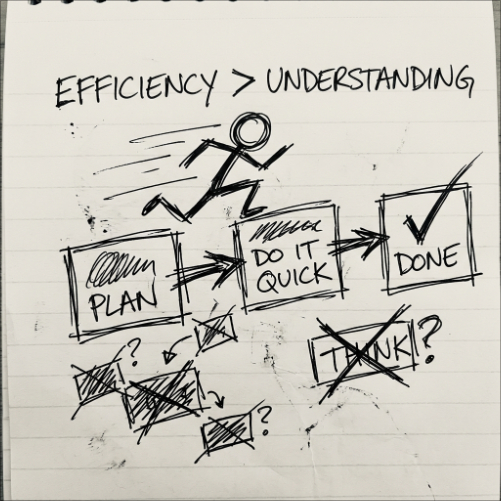
In my current position as meteorological data scientist in the RnD (research and development) department I am investigating physical systems in a very research oriented team. In many aspects my work is quite similar to how I worked during my academic career. I study weather and climate, but with the goal to develop a specific product the company can offer to clients. The title best summarises the key conceptual difference between academic and industry work. The “Why?” is the most important aspect of academic work, while for industry I would rather characterise it as “Is it good enough?”. I think both approaches have merit and are essential for their respective end goals. Within academia, the goal is to further understanding and in industry the end goal is to provide goods and services, a solution, for profit.
I have to admit, I found it somewhat liberating not to always think about 4th and 5th order effects of various parameters on my results. It is sometimes quite satisfying to just be content with the goodness of fit and confidence the solution is reasonably generalisable and call it a day. On the other hand, I noticed that while this approach made me faster at completing the task at hand, the lack of deeper understanding of the method or data meant it might take longer to see new solutions in the next tasks.
The “Why?” is the most important aspect of academic work, while for industry I would rather characterise it as “Is it good enough?”
I have to admit, I found it somewhat liberating not to always think about 4th and 5th order effects of various parameters on my results. It is sometimes quite satisfying to just be content with the goodness of fit and confidence the solution is reasonably generalisable and call it a day. On the other hand, I noticed that while this approach made me faster at completing the task at hand, the lack of deeper understanding of the method or data meant it might take longer to see new solutions in the next tasks.
Details of RnD (research and development) work and typical week
Work in an RnD is mainly project based, with several weeks to months devoted to any given project. The time allocated depends on the money that the company allocates and the importance of the project. Time is much more of a stopping factor in solution development than I was used to. For many projects, I do work with colleagues, mainly to discuss possible caveats and identify important datasets to look into. In an RnD department we are all specialised so we rarely work jointly on a project quite in the same way as for example software developers do. While I have guidelines from the management on the direction of the solution and stopping parameters, I have a lot of freedom in investigating the problem and finding solutions. Private organisations, especially midsized ones, are also much more flexible in acquiring hardware and software if the expected benefit is justified. University machines tend to move much slower in that regard.
Progress and ultimate solution is documented for internal use in a much coarser way than it is done for a paper and presentations are limited to group meetings. While I still attend conferences and workshops, I am no longer presenting my work. Our solutions are trade secrets that give the company a competitive edge. However, owing to the large number of 3rd party funded projects continuously running in the company, my work is occasionally presented in a consortium meeting. To streamline the process and manage a large number of running projects, the company has an innovation team, dedicated to applying, administrating and reporting on those projects.
Typical week
In a typical week I will work on one or maybe two major projects with occasional short tasks that come up during the week. While end of week goals are usually decided together with the head of the department, I have complete freedom in how I structure my days (compared with software development teams that have shorter tasks with greater degree of urgency). On most tasks and projects I work by myself, but I will occasionally ask other colleagues in the department for their thoughts on the project, possible data sources and methodologies I can use. So until now I have rarely worked on a project truly collaboratively, in a way that I would split different development avenues with colleagues in a coordinated way. While we do have a subteam that works closely together in developing models, my specific position in the RnD team is such that I mostly work on novel or independent projects.
I do have weekly meetings with a direct colleague, more experienced and knowledgeable, to answer any questions or identify caveats in my research that result from my lack of domain specific knowledge. Once per week we also meet with the head of the department to catch up on the status of running projects and identify possible connections to the broader company agenda. These meetings help in gaining insight into the long term relevance of the project and identify connections between different teams and untapped resources available in the company to solve a given problem.
Once every two weeks, we have a team meeting where everyone has the chance to update the team on their current projects and status. This is a perfect avenue to practice presenting skills, learn the topics of the whole team and find synergies in the team.

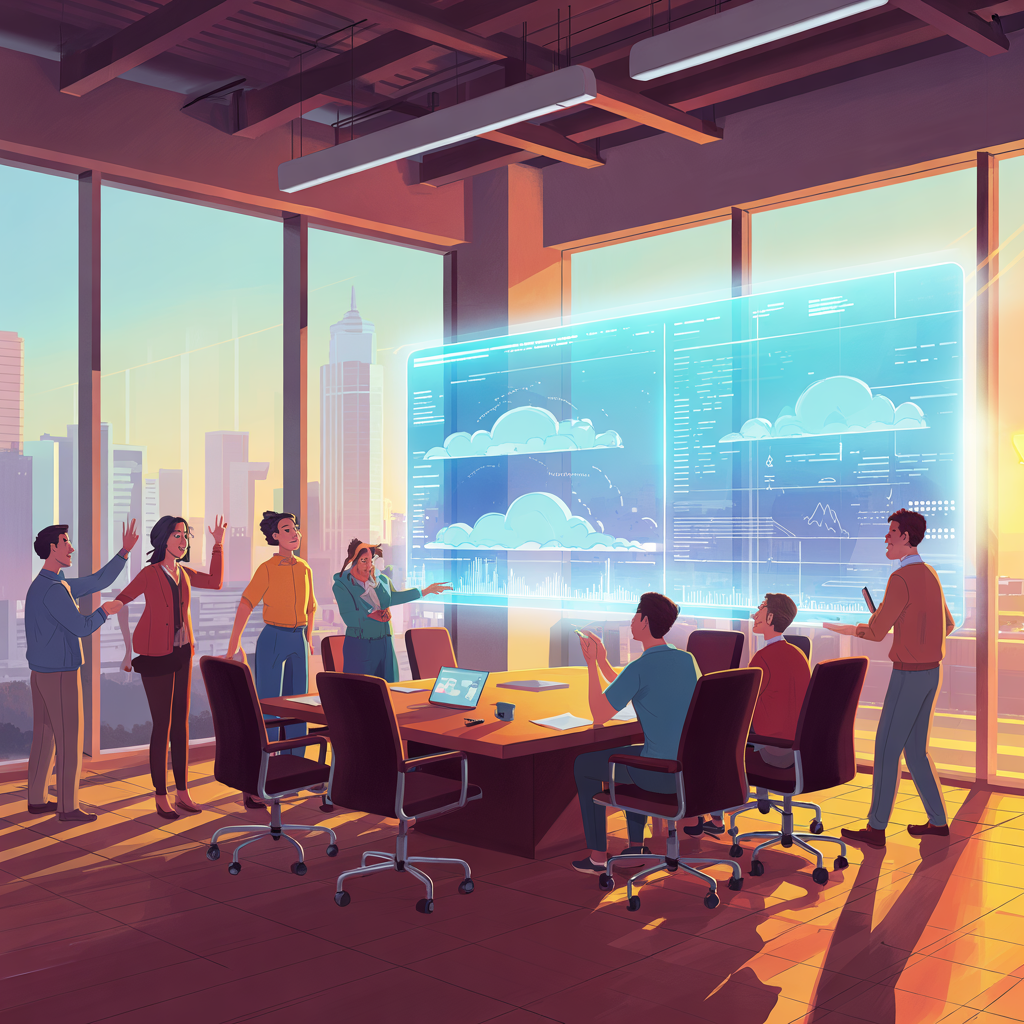
Sometimes I will have meetings with project management, to address questions or concerns of customers on our products. Here I don’t have direct contact with the customers themselves. Instead I will talk to the colleague to first understand what the problem is and formulate next steps with him that are to be relayed to the customers. Most often only an explanation is needed, but sometimes the feedback leads to further research that improves our product or in development of a new one.
Similarly, I will meet on occasions with the innovation team that manages third party funded projects. The innovation team reports on our progress (work that RnD team does) and sometimes they need further clarification and explanation. Or they just want to make sure that their understanding is correct and what future possibilities for a project are from a research perspective.
A couple of hours per week are always dedicated to administrative (project management and filling timesheats) as well as literature research.
While I do attend a few conferences per year, as participant only, I do not really get to travel anymore. Any work that I do is presented by the innovation team, product managers or the head of the department. The research based discussions are almost completely limited to the RnD team or occasional question at a conference.
That is that. At the end of the day I generally clock out, close my laptop and with it the work brain. So the evenings are reserved for writing this blog, meeting friends and enjoying other hobbies.

Overall, I feel I am much more specialised, compared to an academic. More of a solution cog in the company machine, with much of work on project finding, data, software development, grant application and reporting outsourced to other teams in the company.
Leave a Reply