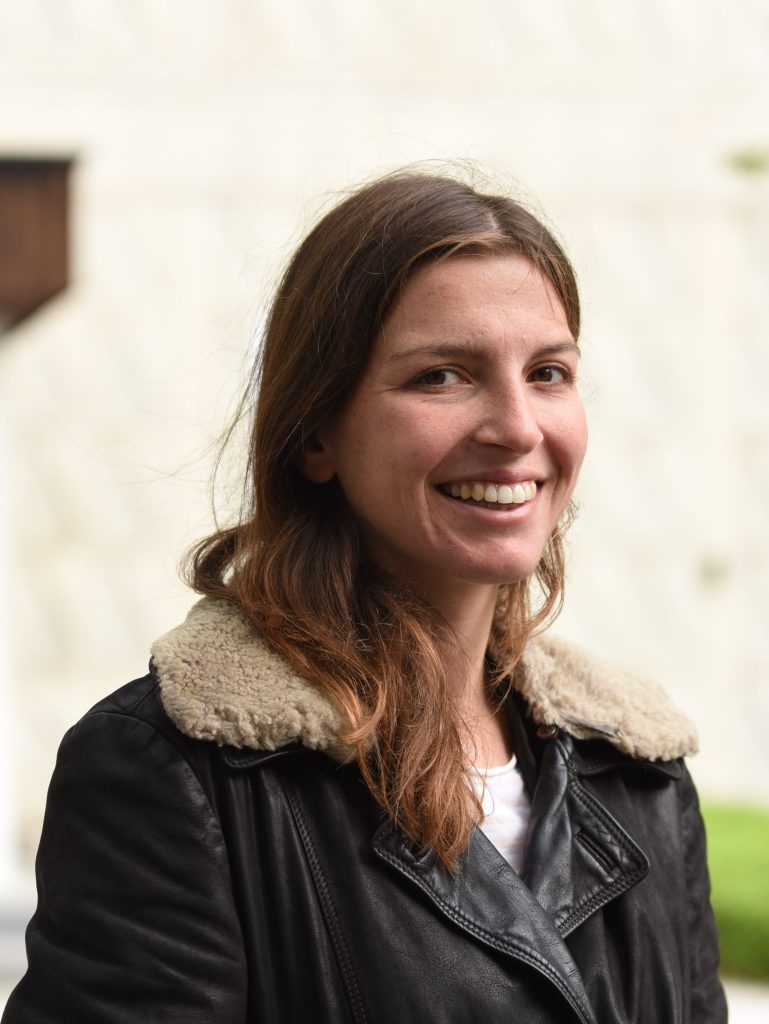
I met Lara during our undergraduate physics studies. What I admired most about her is her passion for understanding the subject, determination and cheerful attitude towards life and everything she does. For that reason, I am especially grateful that she is the first person I interviewed for this blog.
Her research background is in theoretical solid-state physics. As a quantum physicist, much like astrophysicists, she did not have a clearly defined industry path outside academia. I was therefore curious about her journey, what motivated her to venture into the private sector, and why she decided to return to research after a few years.
Rethinking the academic path
Lara studied physics at the Faculty of Mathematics and Physics at the University of Ljubljana, Slovenia. She was drawn to the field because it explores the most fundamental building blocks of nature and helps us understand everything around us. It is therefore no surprise that during her bachelor’s studies, she developed a particular affinity for quantum mechanics, which later became the focus of her doctoral dissertation at the Jožef Stefan Institute in Ljubljana.
She greatly enjoyed her time during the PhD and was a prolific researcher, working on a series of exciting projects and producing several publications. Yet even an excellent publication record is not enough to secure a permanent position in academia.
… my [PhD] advisors, told me that if I ever want to get a permanent position in physics that I would need to go on, I don’t know, two postdocs each for two to three years. I was just not up to do it, because I don’t want to leave my home for that long.
That’s why I decided to quit and to try something in the private sector.
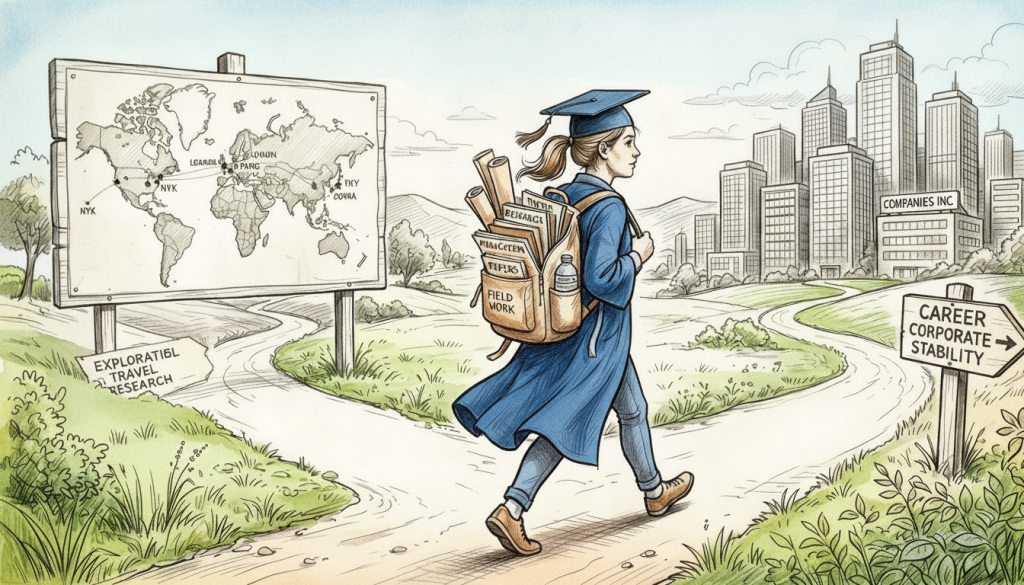
There were other reasons Lara highlighted during our conversation. The academic bubble, she noted, can have a crippling effect on how individuals perceive their options: people often remain unhappy in a familiar environment rather than try something new. For Lara, the decision to venture into the private sector was a way to break free from that.
I saw other colleagues, who just continued and went on postdocs, and they were unhappy on postdocs. They were not 100% passionate about physics … I saw that they are just doing it because they are too afraid to do something drastic. I didn’t want to be that.
Lara, the consultant
And that is how Lara became a data engineer at a consulting company BE-terna. Her daily work involved developing innovative approaches for data processing and storage as well as communicating with the clients to integrate their feedback into the solution.
Compared to other colleagues who did not do a PhD, she felt she had a greater ability to abstract a problem into its building blocks, which helped her see unique solutions. She found the industry more goal-oriented than academia. A big difference she noticed was that the people had a clearer separation of work and personal life. The latter is very much blurred in science.
In science, I think you feel like you should really leave your legacy. You should have some legacy of what you do while in private sector. It’s about doing the job, and doing it well, maybe, uh, more growing as a person.
She also noted that the department head in the BE-terna cared deeply both for her personal and professional development. Stark contrast to what she was used to in research. The projects were very challenging, with a completely different way of thinking and end goal, but ultimately did not resonate with her.
The job hunt

She shared some top tips with me on her job hunt experience. The most important thing in securing an industry job was to show a genuine interest in the company and the job she was applying. She suggested to not apply because you are waiting for the results of some funding scheme, but if you are applying to industry jobs, do it because you want to, even if for a few years. In her experience, companies understand the skills PhDs bring to the table; what they worry is that you might leave once they have trained you for your job.
To prepare industry CVs and a motivation letter, she used the help of friends and family, particularly her dad, who works in IT.
Back to the future
In the first year as a consultant, she focused solely on her new position, becoming familiar with the corporate environment and intricacies of client contact. Gradually, the desire to return to more fundamental problems was forming in the back of her mind and becoming ever louder.
So she found time after work, on the weekends and any free time she could spare to continue working with her PhD advisor. This decision played a crucial role in her decision to give academia another chance when the right opportunity presented itself.
Actually, for one year, I didn’t do any physics, then the next year I did 20%. And already then, after one year of not doing any physics at all, I felt, agitated to go back, but it’s actually very easy to go back after one year.
She added that luck played a big role in her return to science, with the Faculty of Physics receiving a large European grant to bring quantum entanglement into real-world applications, a topic she was very familiar with.
Concluding thoughts
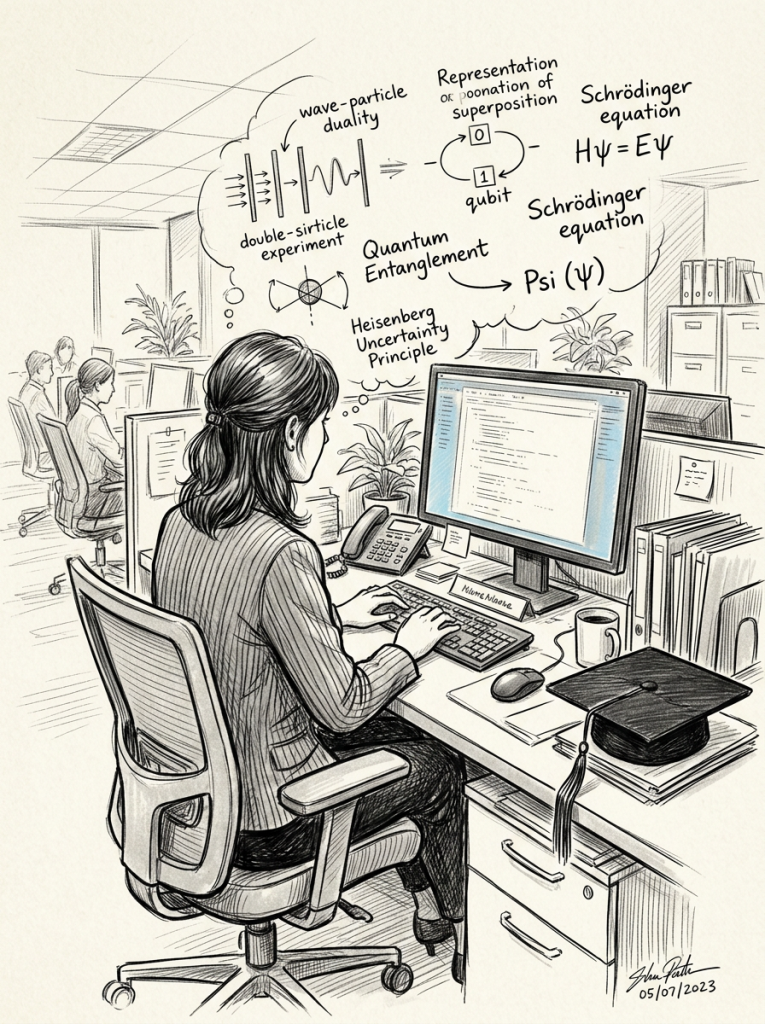
Overall, her Industry experience has had a positive impact on her life and career in spite of the gap that now appears on her publishing record. She has a renewed passion for her research and knows that academia is her choice, not the only option. Additionally, grant reviewers find her experience valuable and positive.
Because now I know that I want to be in science. I know that I want to be in science, and here I am, and that’s it.
I also, I know that if I wouldn’t get a guarantee that I could stay longer at the faculty there are good jobs in industry, and I know that they would value me. So, I actually feel less afraid.
Links

Leave a Reply