PhD in
astrophysics
Numerical modeling
Left academia: shifting priorities
During the first postdoc
Project manager: research and arts grants
Time out of academia:
4.5yrs
The attractive world of comets and asteroids
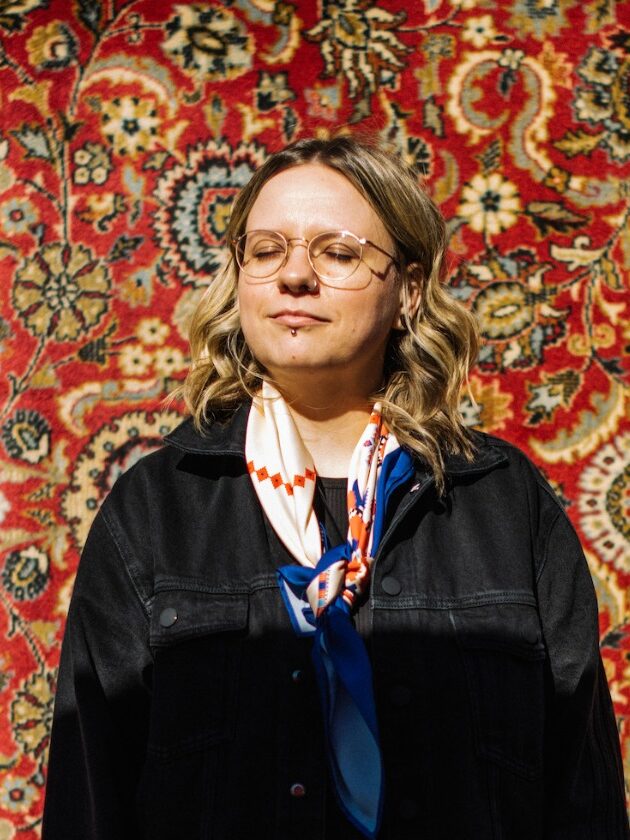
Katya had always been a curious person with a flair for fantasy, so it was perhaps no surprise that her mom’s captivating stories about the mysteries of the Universe inspired her to study astronomy. When her mom was a child, she had been equally fascinated by the bright objects moving across the sky. And years later, she still loved telling the story of the week-long train journey she had taken as a child across vast distances to witness the solar eclipse. Those stories stayed with her, and when the time came to choose a field of study, Katya naturally went with astrophysics, despite her parents’ strong advocacy for a “safer” path such as economics or computer science.
I was thinking, yeah, I’m gonna take physics and go to the astronomy department. Because I already know quite a lot [about it]. This must be fun! I was probably romanticising a bit what it is like to be an astronomer.
Her bachelor’s and master’s theses both focused on exoplanets, and she had hoped to continue working on the topic during her PhD. When the application season came to an end, she received an offer to work on numerical simulations of comets and asteroids in the north of the Netherlands, Groningen. In a way, this opportunity brought her back to what first inspired her to pursue astronomy.
… it was still connected to planets and exoplanets, so I thought, okay, I can try. I thought, that’s an adventure, we’re gonna try this adventure, and see.
And it turned out to be quite an adventure. She focused on her research, but was also actively involved in various outreach activities, such as Astronomy on Tap. She had a great relationship with her supervisor, which made her experience even more enjoyable. And she even has an asteroid named after her, as per graduating tradition.

Discovering a new path
Scientifically, her PhD experience was often quite lonely. She was the only graduate student at her institute working on objects less massive than planets, so she couldn’t engage in scientific discussion or collaborate with her peers. At the same time, she had been involved in teaching and outreach activities and gradually noticed that non-research duties brought her more satisfaction and joy.
Although her priorities had begun to shift, she decided to pursue a postdoc, provided she could stay in the Netherlands, where her partner (now husband) was also working. Then a perfect opportunity presented itself, both geographically and professionally. A novel postdoctoral program opened up in Groningen combining research with a one-third teaching load. In addition to teaching existing courses, she also had the opportunity to co-create a course and serve as the lead coordinator, responsibilities that postdocs rarely had.

I think that there should be a variety of positions where you don’t do only 100% research, but also a combination of research and teaching, because people like different things. Is it better to have a postdoc passionate about teaching, or a professor who hates teaching?
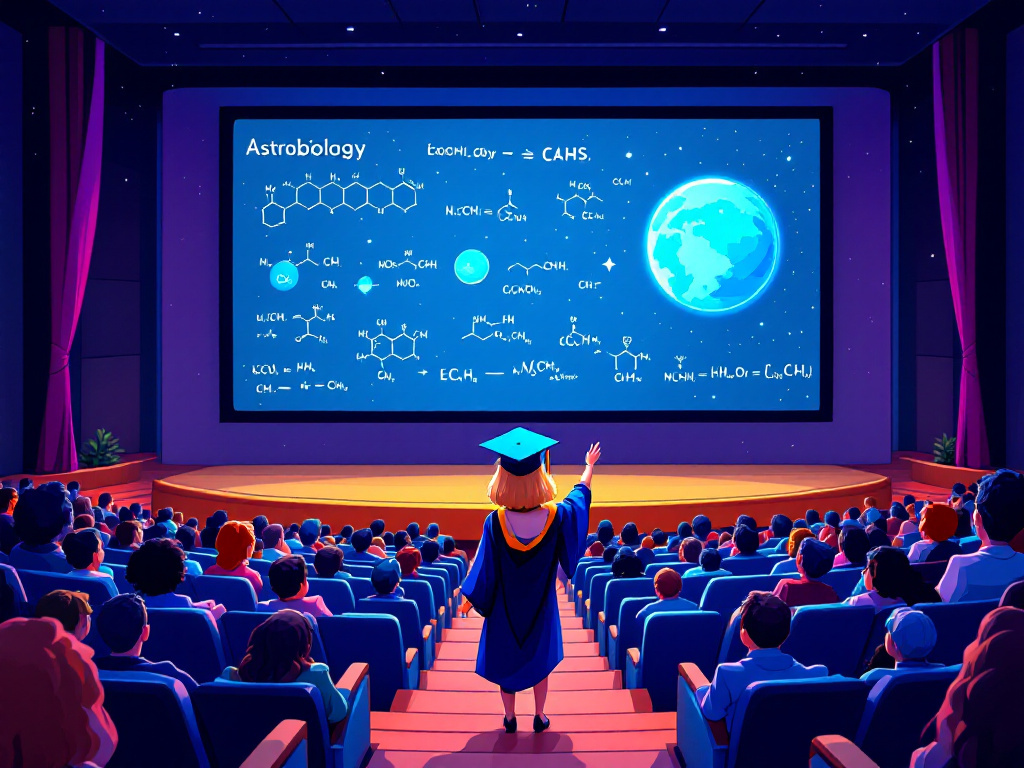
The more she became involved in organisation, management, outreach and teaching, the more she enjoyed these activities. Over the course of her contract, she reflected extensively on her future and career development. She found herself moving away from the purely research-oriented aspects of her chosen career, becoming increasingly drawn to management responsibilities. At the same time, she felt that her publication record was not competitive enough for the increasingly demanding publish-or-perish environment of academia.
So if I had more papers, at that point [toward the end of the postdoc], I think that maybe my decision would be different. In combination with what I like and what I’m good at, I decided that’s probably the time to go out.
This led her to one clear conclusion: it was time to pursue a different path.
Project coordinator and the tangible impact
Her shift to a new career came about quite accidentally after getting acquainted with a project manager at the International Astronomy Union (IAU) during a summer school on science communication she attended in her postdoc. He acted as her team’s mentor at the school, and they connected both on a professional and personal level. Months later, she contacted him asking for feedback on her CV. But instead of feedback, she got a job offer! She was offered a temporary role as a project manager at the IAU office based at the University of Leiden.
So my role was a mix of this: creating projects, fundraising for them, writing grant applications, and also coordinating the projects that are already running.
Her daily activities revolve around studying grant conditions and writing proposals. This was her first role not focused on research. Working in such an established international organisation meant that she quickly learned how to find partners and grants, establish a network, write successful proposals and ultimately support the smooth running of projects.



One of the aspects of her new career that she enjoys most is seeing the direct impact of her work on the people who benefit from the projects. Outside of teaching and supervision, a traditional academic career rarely offers such tangible impact. Through many of these projects, she has had the opportunity to work with highly motivated and passionate people whose exciting ideas she helps bring to life by securing funding and supporting project management. Together, they form teams united by a shared commitment to the project’s success.
I think, for me, it’s important that there is a nice team and that there is value in the project. Then the type of it doesn’t matter.
She believes that the tell-tale signs one might be a project manager in disguise are a natural tendency to organise, strong communication skills and having fun juggling many small tasks throughout the day. However, the exact nature of the work depends on the size of the organisation and whether it operates on a for-profit or non-profit basis. In smaller organisations, project managers generally wear many different hats, whereas in larger organisations the responsibilities are shared among more people.
More recently, she joined a private foundation that supports the development of art, science and architecture through funding. Instead of applying for funding herself, she’s now a program manager on the science team, handling the managerial, operational, and organisational work that keeps the awards process running. She is excited about the strategic nature of this role and the opportunity to help shape the future of research and the arts.
Job hunt for a non-technical role
The job hunt experience is very different for everyone and depends on many factors, including your background, the role you are applying for, and even timing (hello, COVID). While her first job offer came about quite naturally, she has since rarely received a positive response, or any response at all, to publicly advertised positions. She attributes this partly to her own CV-writing skills and partly to employers not always recognising how the skills gained during a PhD in astrophysics translate to project management roles.
Instead, her recipe for success has been networking, networking and then some more networking. Whether through LinkedIn, conversations with people working in roles or organisations she was interested in, reconnecting with acquaintances, or simply by letting her network know she was looking for opportunities, these personal connections proved far more effective than submitting applications through job portals.
All my jobs I found after my postdoc were down to the power of networking.
Finding your orbit

One of the advantages of a PhD and postdoc is the opportunity to explore many different aspects of academic life, from teaching and supervision to management and outreach. Taking advantage of these opportunities can help you discover not only what you are good at, but also what kind of work you genuinely enjoy. For Katya, these experiences ultimately helped her realise that her strengths and interests lay beyond a traditional research career.
The transition into a new profession is not always straightforward, and finding the right opportunity may take time. Looking back, one piece of advice stands out: don’t hesitate to reach out to people already working in roles that interest you. Most are happy to share their experiences, and those conversations can become valuable signposts while you are finding your own career path.
If you’re curious about the type of job, you can always try to contact them and say: hey, I would like to know more. Can we talk? And yeah, maybe not many people will answer, but someone eventually will. Especially if you ask former astronomers.

Connect with Katya on LinkedIn.
Contributions and AI credit
Tadeja wrote and edited the text. When polishing the rough edges, she recruited help from close 3-dimensional friends: Alice and Alina and two artificial friends: Open AI’s ChatGPT and Mistral AI’s Vibe. All images were kindly generated by Vibe, with skilful prompting by yours truly.
Leave a Reply