PhD in
astrophysics
Observations: processing and data modelling
Left academia: fading interest
After the second postdoc
Data scientist: AI consultancy
Time out of academia:
3yrs
Motivation: Inquisitive Sü’s chance path to astrophysics
Science was always a part of my life; how I thought and how I looked at the world. Like, my favourite toy was a microscope.
All aspects of the natural world fascinated Sü, from biology to chemistry and physics. She might have been mildly partial to chemistry, but it was impossible to pick only one. So when the time came to choose the field of study, the deciding factor was the end-of-school exams.
In her native Türkiye, the high school leaving exams determine admission to universities and programs. Sü’s score placed her in an astrophysics program; a chance outcome that eventually brought her to Germany to pursue a Master’s and PhD in the subject.
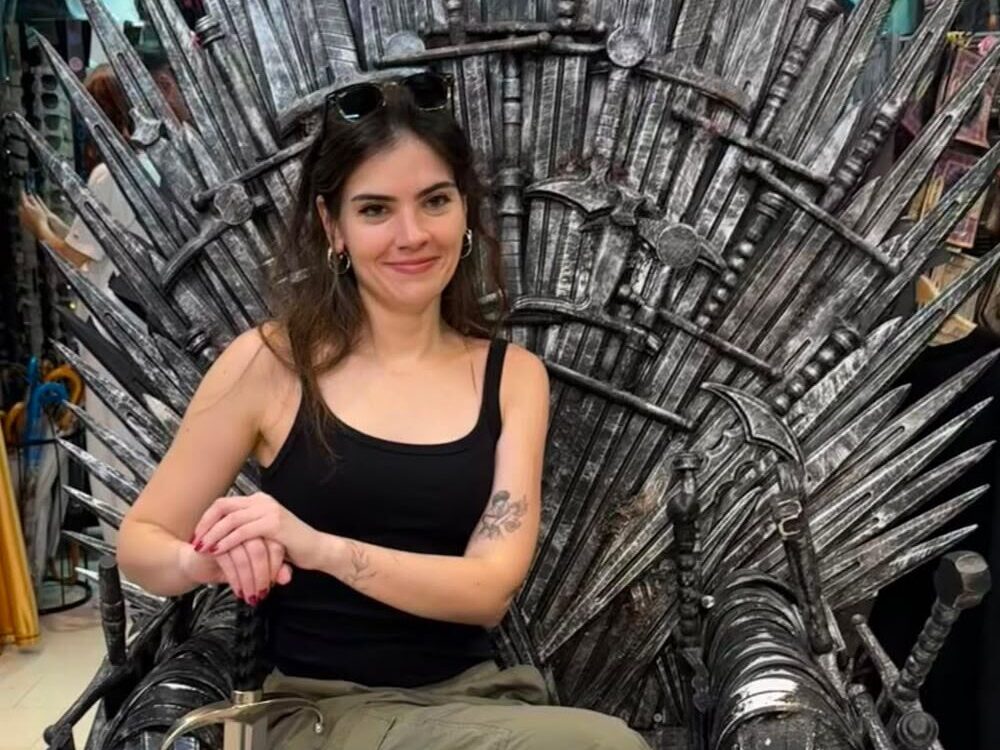
Yeah, sometimes it helps if you get an external nudge in one direction. I really thought about retaking the exam because you can take it multiple times. But I would have to wait a year … eventually, it all came together for me.
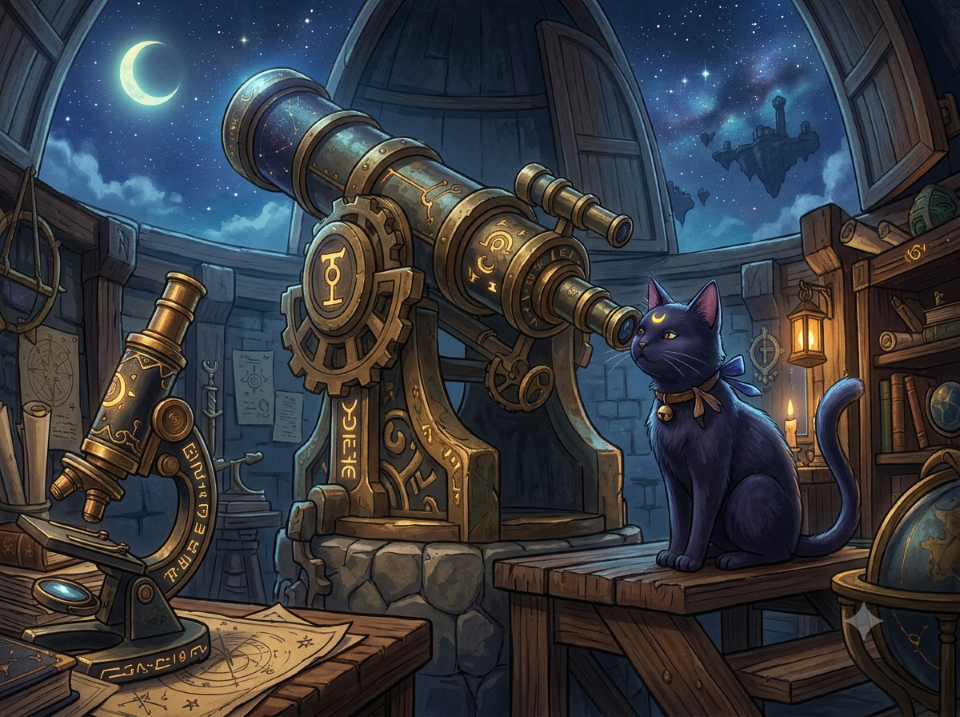
The microscope of her childhood eventually gave way to its big brother: the telescope. Through it, she was introduced to observational astrophysics and developed a fascination with understanding the universe through observations. As a fun perk, her astrophysics education equipped her with the knowledge to challenge popular misconceptions about astrology, a discussion topic she still enjoys from time to time.
Looking back, her research path reflects her two greatest interests: understanding the natural world and relying on observational evidence. During her PhD and postdoctoral research, she studied the complex process of star formation, a field that combines physics and chemistry. Along the way, she developed data-reduction pipelines and modelling code for analysis, getting an early taste of data science.
Inquisitive Sü’s life beyond the stars
The decision to ultimately leave academia grew gradually, and it was not one single reason that tipped the scales. The years of commitment to a single research topic, frequent moves between cities, little financial stability to save up for rainy days and no real opportunity to put down roots gradually took their toll. Over time, the cycle of breaking and reforming friend circles as people move away, new people move in, and eventually you leave, all became too heartbreaking. When she finally moved to Vienna, something changed and she realised she no longer wanted to move again.
At the same time, I realised I just want to enjoy the city; I just want to get to know the city that I’m in because I had never truly felt at home in any of the cities I had lived in.
Without the prospect of a permanent academic position in Vienna, staying also meant leaving astrophysics. For Sü, the decision became less about leaving science and more about choosing the life she wanted to build.
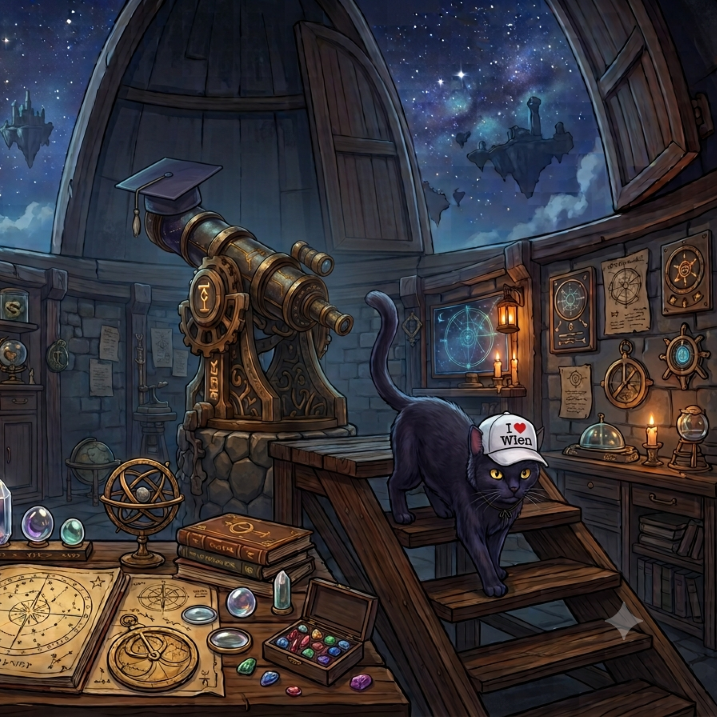
Another major reason was that I had done a lot of self-work [answering] who I am outside of being an astrophysicist. And that was a hard question to answer. Because in academia, we pour everything into our work. There was very little work-life balance. There was very little self-worth to be found outside of publishing, presenting and constantly chasing data, constantly trying to be ahead. And this was heartbreaking for me, because I believe that science should move forward through collaboration and not competition.
Move to industry: Finding where to go and how – day in a life of a data scientist
Staying put geographically meant finding a new career. The question now was: which one?
During her research, her favourite parts of the job became programming and digging through large observational datasets to extract meaningful insights. She enjoyed the challenge of finding clever and elegant solutions, even if it meant spending hours combing through obscure Stack Overflow threads to solve a niche programming problem. As she explored career options and spoke with friends both inside and outside of academia, she realised there was already a name for the work she loved: data science.
That is how Sü, the astrophysicist, became Sü the data scientist. Today, she works at the Vienna-based AI consultancy called Sclable, where she applies the same scientific mindset to a broad range of real-world use cases.
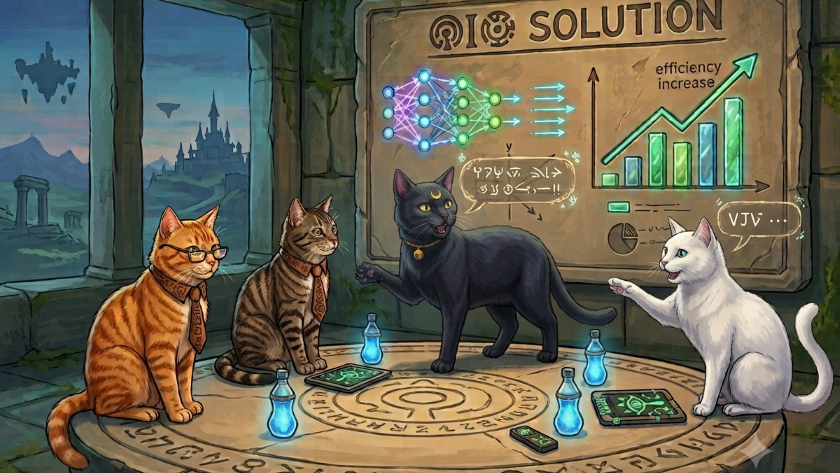
What I like most is that the problems you’re trying to solve are real. Whether you’re predicting when a train will arrive, or what the price of this thing will be next year. It sounds boring compared to astrophysics, but when you get into it, it really is not.
Unlike in astrophysics, where the societal impact is often indirect and long-term, industry projects have clearly identifiable beneficiaries. A better prediction model can improve a client’s service within weeks or months, making the connection between her work and its effect very tangible. She is quick to point out that astrophysics has a positive contribution to society beyond pure knowledge acquisition. It inspires future scientists, occasionally drives technological innovation, and reminds us to appreciate the vastness of space and the beauty of the natural world. But these effects are difficult to predict or measure. In industry, the impact is much more immediate and direct: the client has a problem, and once you solve it, you know exactly who benefits.
For example, you make a better prediction model for something, and then that goes into production, and people are actually using it, and it makes a difference in their life. My [astrophysics] specialisation was super niche, and it doesn’t necessarily impact the layperson. And I just wanted to have an impact.
Job hunt: Beyond the academic CV
In the final months of her postdoctoral contract, Sü began applying for data science and engineering positions using the same academic CV she had relied on throughout her research career. While this approach had worked for some of her friends a few years earlier, she quickly realised that the job market had changed.
When I left academia, that’s when being a data scientist was claimed to be the sexiest job. The industry itself became extremely competitive. So having a PhD just was not enough.
So Sü went back to the drawing board and rolled up her sleeves. Fortunately, she had friends who had already successfully transitioned into industry, and she could draw on their experiences. A friend shared tips and tricks she had learned in workshops on CV writing and best practices for tailoring application material to a specific industry.
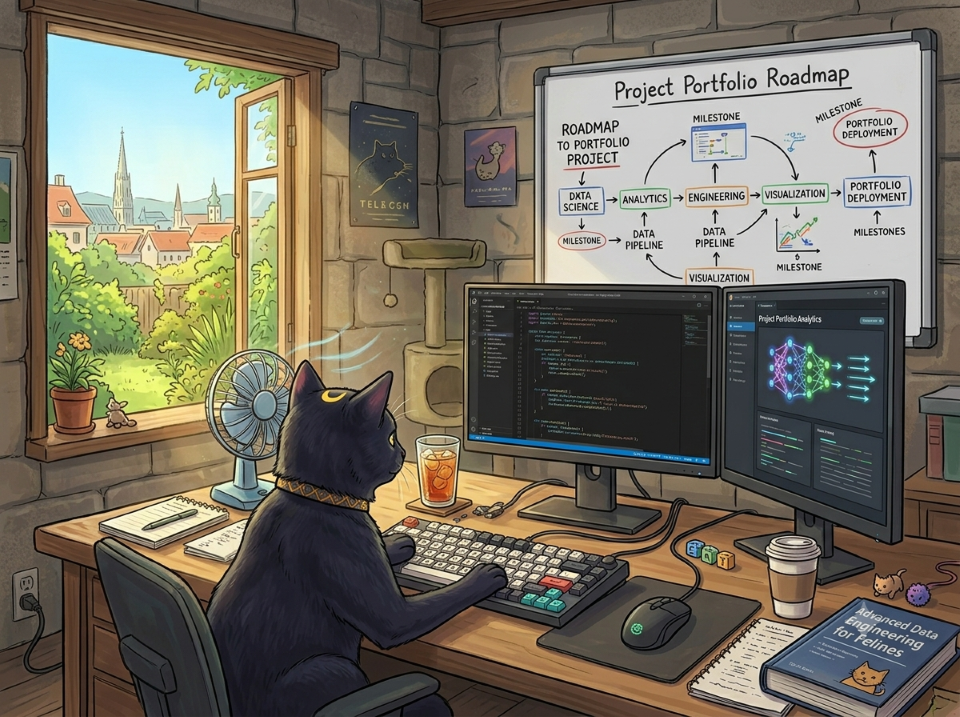
The most valuable and enjoyable piece of advice she received was to build a portfolio project using open-source data in Python, the programming language most commonly used in data science, and publish it on GitHub. Armed with this advice, Sü spent the last month of her postdoctoral contract sweating through the summer heat glued to her computer.
The result was a polished project that showcased not only her technical and statistical skills but also her interests and her understanding of industry needs, something that many former academics find challenging to demonstrate. She also completed several online machine learning courses to deepen her knowledge and gain formal credentials that industry employers readily recognise.
With the project ready, Sü turned her attention to her CV. After a few rounds of feedback from friends, she had a polished data science CV ready to send out. Even then, the job market for data scientist positions in 2023 had been rather turbulent and based on her experience, she estimates that only one in 15 applications resulted in an interview.
I started targeting data scientist positions and data analyst positions writing tailored cover letters, doing research on the places that I applied to. If something seemed interesting and if it seemed like a workplace that I could see myself working at, I would go to their websites, and if they have an Instagram account or something, I would really look at what they are doing. So it would give me an upper hand in the interviews that I have done my research. I’m not just sending blind applications.
She noted that the biggest hurdle in the application process is getting to the interview stage. Once invited, the success rate generally improves considerably, especially if you have thoroughly researched the company and prepared well for the interview.
For former academics aspiring to become data scientists, this advice has never been more relevant. As newly minted data science graduates enter the job market in growing numbers, competition for entry-level positions has intensified. At the same time, the rapid rise of generative AI and the increasing specialisation of roles across data science, analytics and data engineering make it even more important than ever to clearly communicate your unique combination of skills and interests.
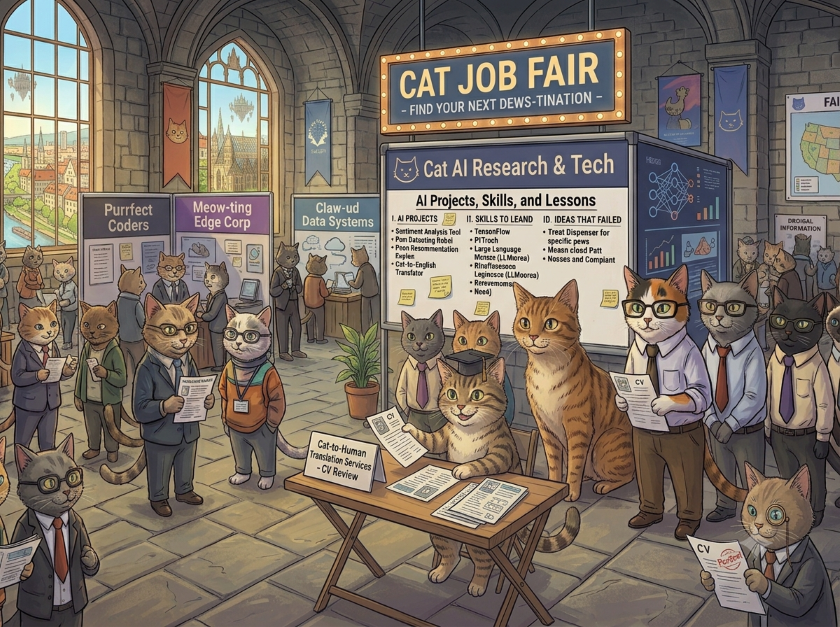
Seeking feedback from experienced friends and colleagues and developing resilience to cope with rejection can make all the difference for a successful and sustainable job hunt.
A job interview: A two-way street
Sü has now been working at the AI consultancy for three years. By the time she interviewed with Sclable, she had been through several interviews with other companies. This one felt different from the beginning. She actually misspelt the company’s name in her cover letter. Instead of treating it as a mistake, everyone simply laughed about it together. The whole conversation felt relaxed, and she immediately connected with the people interviewing her, both professionally and personally. The interview process consisted of several rounds: an initial HR screening, an interview with the data director, and an intensive technical interview that both challenged and excited her.
By that point, I had had a few interviews, and I just thought, wow, this was really nice. I had other nice interviews, but somehow I felt connected to the people I was interviewing with. We laughed, we talked about astrophysics, we talked about what I want to do, what my strengths are, and what I lack. I can say that I straight up knew that I vibe with these people, and it would be so nice if I worked there. It was just a good feeling.
Concluding thoughts: Choosing the right team
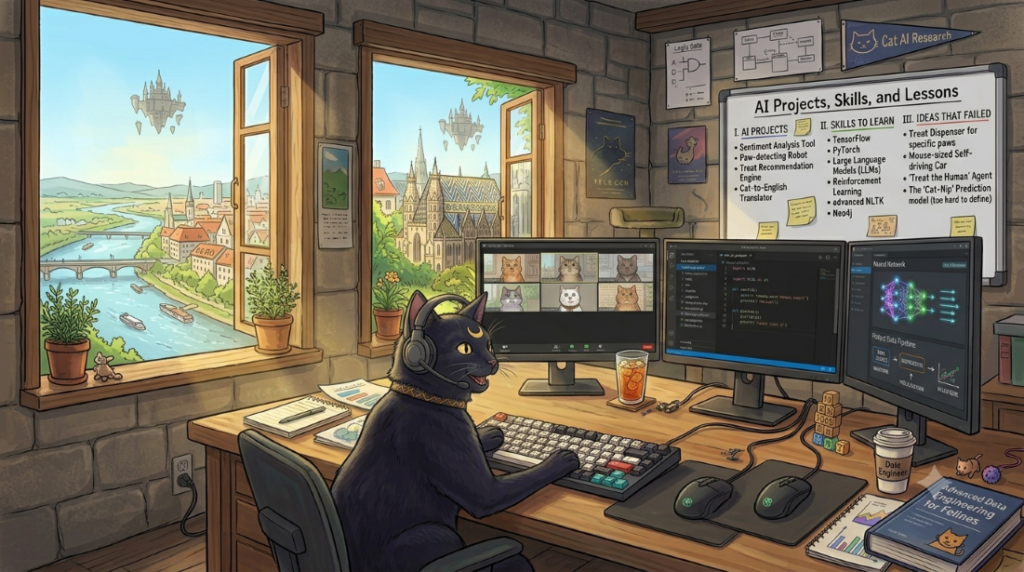
Sü now works at an AI consultancy with the energy of a start-up. What she appreciates most is being challenged while also being given the freedom to make mistakes, to grow and learn. She works with a team that inspires her and makes her look forward to logging on every morning, ready to take on whatever problem comes next collaboratively.
It’s just the fit for me, and I’m very happy about it, and I also wish this for everyone: to find their place where they work, because a lot of our life is work. Whether that’s academia for you, or industry. Whatever all these astrophysicists dream of doing. I hope it happens for them.
Contributions and AI credit
Tadeja wrote and edited the text. When polishing the rough edges, she recruited help from close 3-dimensional friends: Alice and Alina and an artificial friend: Open AI’s ChatGPT. All images, but the profile picture, were kindly generated by Google’s Gemini, with skilful prompting by yours truly.
Leave a Reply