PhD in
mathematics
Theory
Left academia: not enough reasons to stay
After the PhD
Project manager: Tech/
meteorology sector
Time out of academia:
2.5yrs
TL;DR
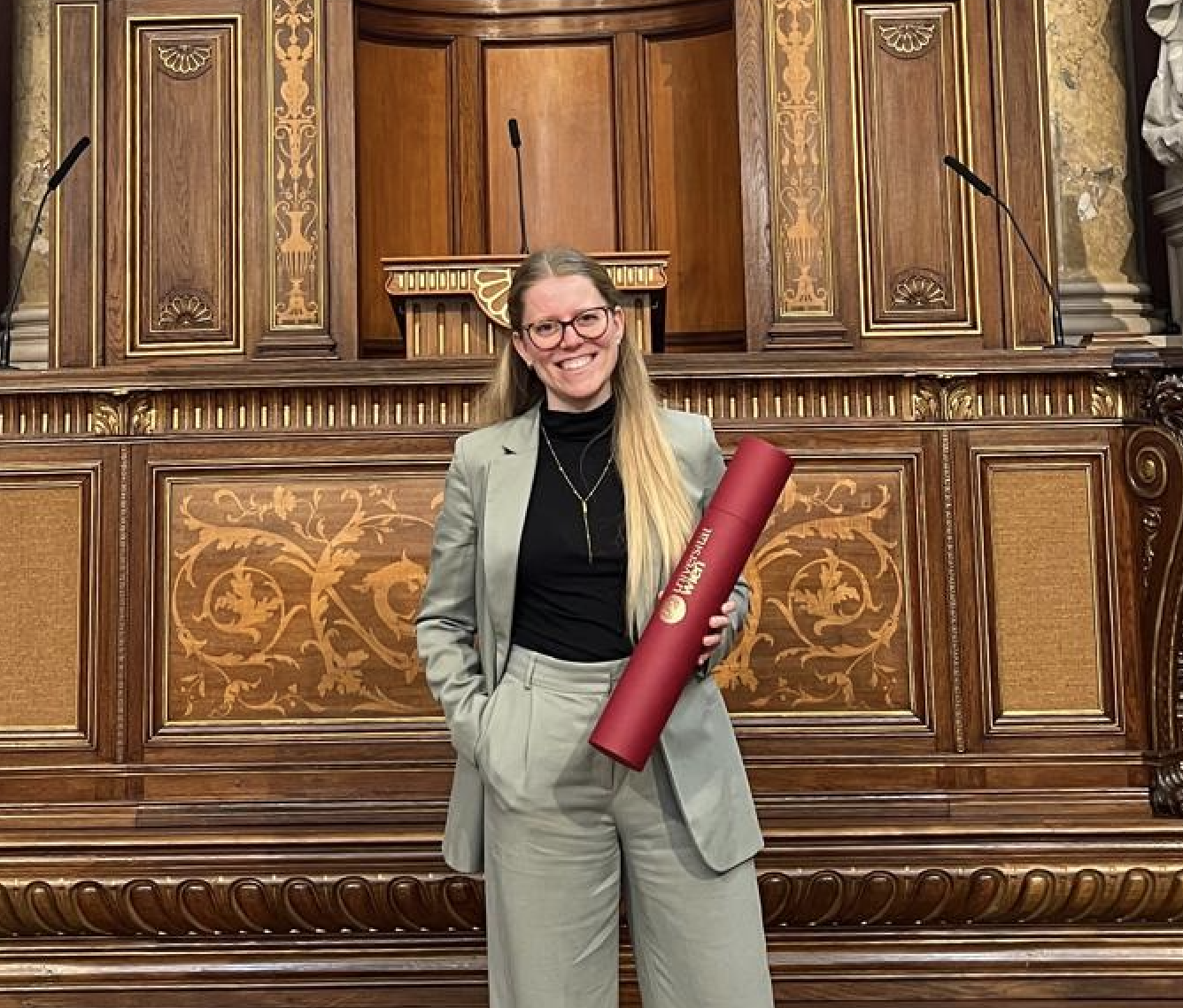
An aspiring journalist from Austria became a mathematician and eventually an innovation manager at the tech/meteorological company Ubimet in Vienna. Alex didn’t let convention determine her career; instead, she followed her inner detective towards a role that is both challenging and exciting. Along the way, she reflected honestly on her wishes and skills, actively sought help, and, when the right help wasn’t available, organised it. And it all started with a childhood dream.
Motivation: One step leads to the next
Alex’s dream was to be a journalist, a kind of detective uncovering stories. Alex also tends to think several steps ahead, so she couldn’t go into this career without thinking it through carefully. With high school finishing, she took an objective look at the career prospects and decided she needed a plan B. While browsing the University of Salzburg curriculum, the mathematics program caught her eye.
Mathematics was the first thing [on the curriculum] that ticked two boxes. I thought I could do it, and it seemed reasonable to find a job with this degree. So I enrolled and then I actually really came to like it.
But she still wanted to keep a door open to her plan A. So she worked full time as a sports journalist and studied mathematics on the side. The more she studied the open questions, particularly in algebra, the more they excited her. And so the BSc turned into an MSc, aka plan C. The years at several different media outlets gave her first-hand experience of her dream career, and gradually she realised she had imagined it quite differently. Midway through her master’s she fully decided to hang up her reporter’s cap for good.
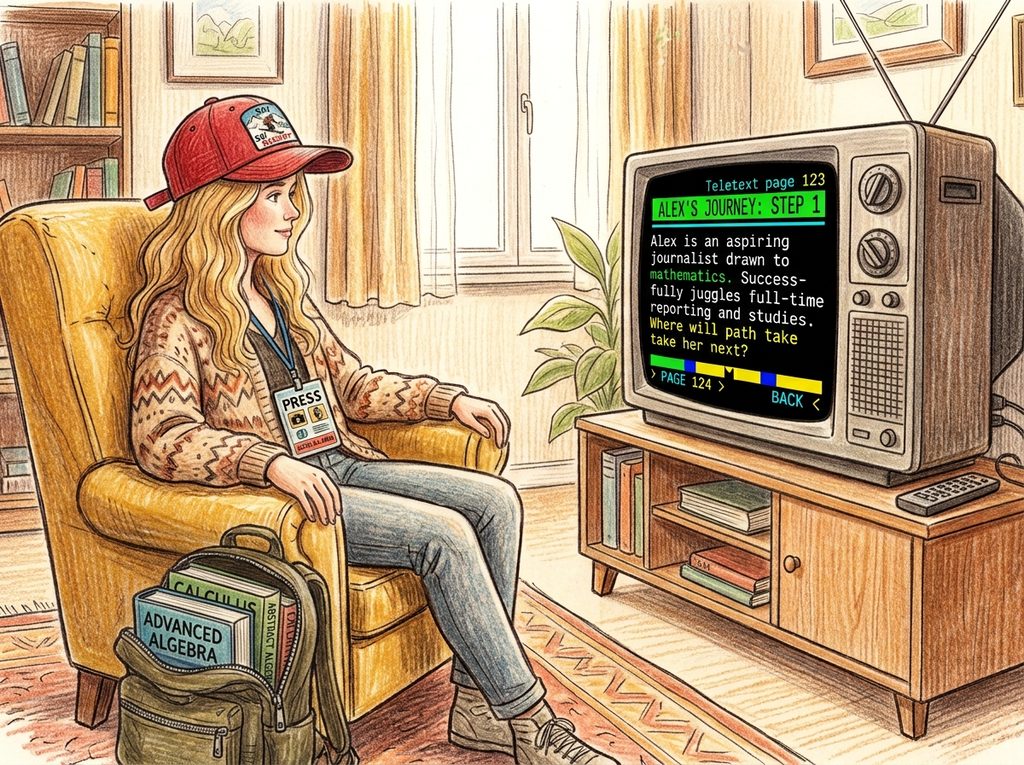
And so the alternative became the new plan A. Just as her Master’s defence was approaching and Alex was getting ready to start job hunting, the COVID lockdowns derailed those plans. Companies were scrambling to move their work and hiring fully online. Many simply paused onboarding new talent, while others slowly adapted to the new reality.
This was a less-than-ideal time to search for a first job. Meanwhile, Alex’s supervisor offered her a PhD position to continue working on similar topics to her Master’s thesis work. The stars aligned and she happily accepted. And so this plan D became the new plan A.
When I deviated from that plan, I thought, well, my initial plan didn’t work out as I anticipated. And I had already deviated from it anyway, so let’s see what happens.
Academia as plan B?
Alex enjoyed her time during her PhD, and for a brief moment she even considered staying in academia. The research questions were interesting, and her supervisor was very supportive of both her scientific and non-scientific endeavours. This support enabled her to go beyond the pure research focus of a PhD and explore other areas of work.
She developed organisational skills as an active member of the Vienna Doctoral School of Mathematics l, as well as project management skills by juggling research and community activities. She particularly enjoyed formulating new research questions and building collaborations to address them. These aspects of her work complemented her natural skills better than pure research did, while helping her develop her networking skills.
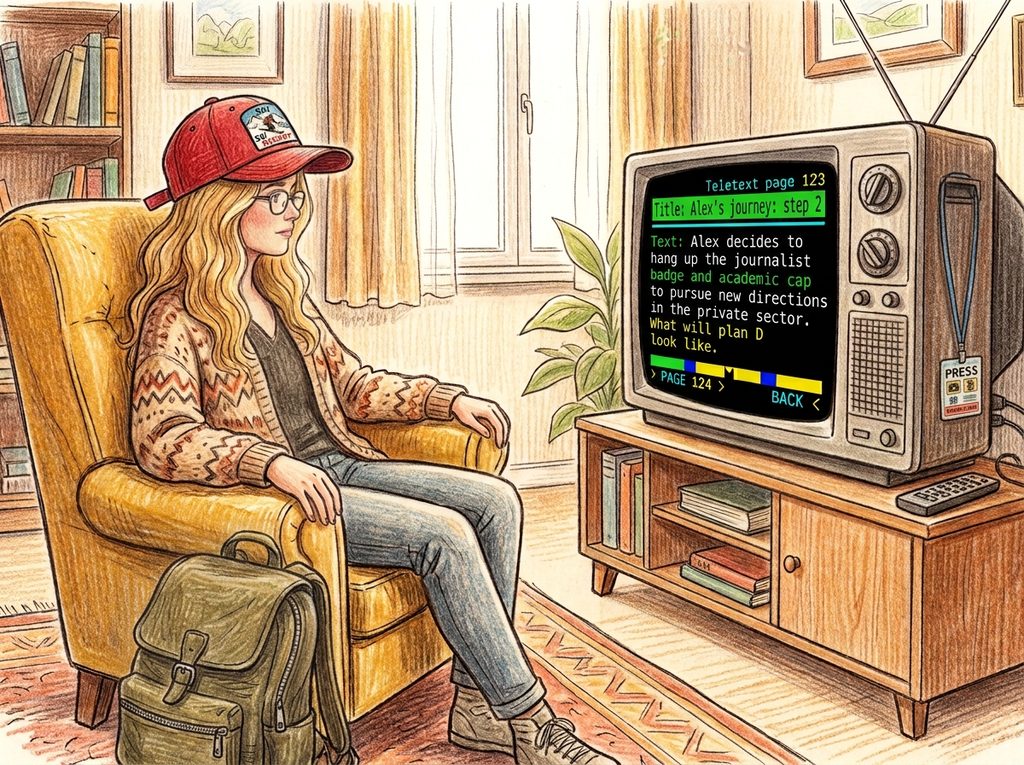
Gradually, the next step became clearer: she would thrive in an industry environment where she could further develop her skills in networking, project management and project development. This led her towards innovation management, a role she now fills at UBIMET in Vienna.
I didn’t really try to get a specific position. But rather, [I focused on] sharpening my skills and understanding better what I am good at and what I enjoy doing. Then I looked for a job that matches this description.
Finding the next steps: If you cannot find the right help, then make it
With her new plan in place, Alex started to prepare for the job search. Her supervisor was very supportive, and in the last year of her PhD they sat down for a career conversation. They discussed her decision and identified what resources are available at the University to make the transition to the next career smoother.
My impression is that a lot of professors in academia, in pure mathematics at least, are not in touch with industry. So even if they want to be helpful, they don’t really know how they can best support their students. It was similar for my supervisor, but he was really dedicated to going through this together and trying to find resources.

She found an interesting career programme with counselling and events offered by the University of Vienna and signed up. The events she attended were a great starting point and provided plenty of valuable advice, but ultimately couldn’t address the specific challenges faced by someone with her academic background.
Their key audience are engineers and physicists, so people who are on the theoretical side, but still more applied than pure mathematics. A lot of the tips they gave us just did not apply to me. So I said, ‘Well, it was nice, but it’s not really what I need.’ Then I decided to pitch the idea to the student board of the Vienna School of Mathematics: to host a career day really tailored to the specific needs and problems that people with a pure mathematics background face when moving to industry. The student board really liked the idea.
The power of the right advice
With support of the doctoral school’s advisory board, the students organised two career events. One was tailored to academic careers, helping the latest batch of graduate students navigate a rapidly evolving academic environment. The other was aimed at students who want to move to industry; Alex led the latter as part of the students’ organising committee.
She built on the events she had attended, taking what was useful and adding what she found missing. The result was a day-and-a-half event that started with the basics and ended with an interactive panel discussion.

The students invited human resources experts from the career centre at Technical University Vienna (TUW) to give both presentations and lead hands-on sessions that took participants from creating a LinkedIn profile to CVs and motivation letters, then to elevator pitches and interviews. This combination gave participants ample opportunity to put the tips and tricks from the presentations into practice. They were introduced to job platforms, effective search strategies, and how to extract relevant information from job advertisements. All of this was tailored to the specific needs of people with a pure mathematics background.
The activity that resonated with Alex particularly strongly was the skill-want matrix. Participants filled out their own matrix, mapping the skills they already have against the kinds of tasks they want and enjoy doing. They were encouraged to find the intersections in this matrix, not only focusing on what they are good at.
With a background in mathematics, it’s natural that people would suggest I should either do something in data science or write a lot of code. Both are things I don’t want to do. It’s important that you identify what you like and what you’re good at, rather than what you are supposed to do; this was really helpful.
The event wrapped up with a panel discussion and interactive Q&A session featuring four people with a PhD in Mathematics who now work in industry.
[The panel members] left academia after their PhDs, and here they shared their career paths and insights. For instance, we discussed salary negotiations and those types of things. Because how can you learn about this if not from people who have experienced it themselves?
Many participants went on to secure industry positions, and some stayed in academia after realising industry was not the best fit. This event was very well received by the students and the school’s advisory board and has since become an annual event. Alex has also been invited back, this time as a panellist to share her experience.
Job search: lessons learned and successfully applied
With her PhD contract almost finished and armed with the tools she had picked up at various career events, Alex selected her favourite job sites and rolled up her sleeves. She started with a broad keyword search, reading through job postings to get a feel for what was out there.
Familiarise yourself with what is out there. Don’t be scared to take a look. The more you know, the more comfortable you get. So just explore what type of opportunities you can find. For me, at least, it really helped me be less hesitant and just feel more self-confident [in the job search].
Browsing through job postings became a habit, and quickly she reduced the parameter space to three key features of her next job:
- Some type of project management position
- Science-based industry domain
- Work with a positive societal impact
Those were the three things I was looking for, but whatever job title would come with them, I didn’t care. A large share of [job ads] are really something where you’re like: this is not what I’m looking for. But some of them, you get a feeling: I could do this, this would be fun. And then you develop a gut feeling for what would make it onto your shortlist.
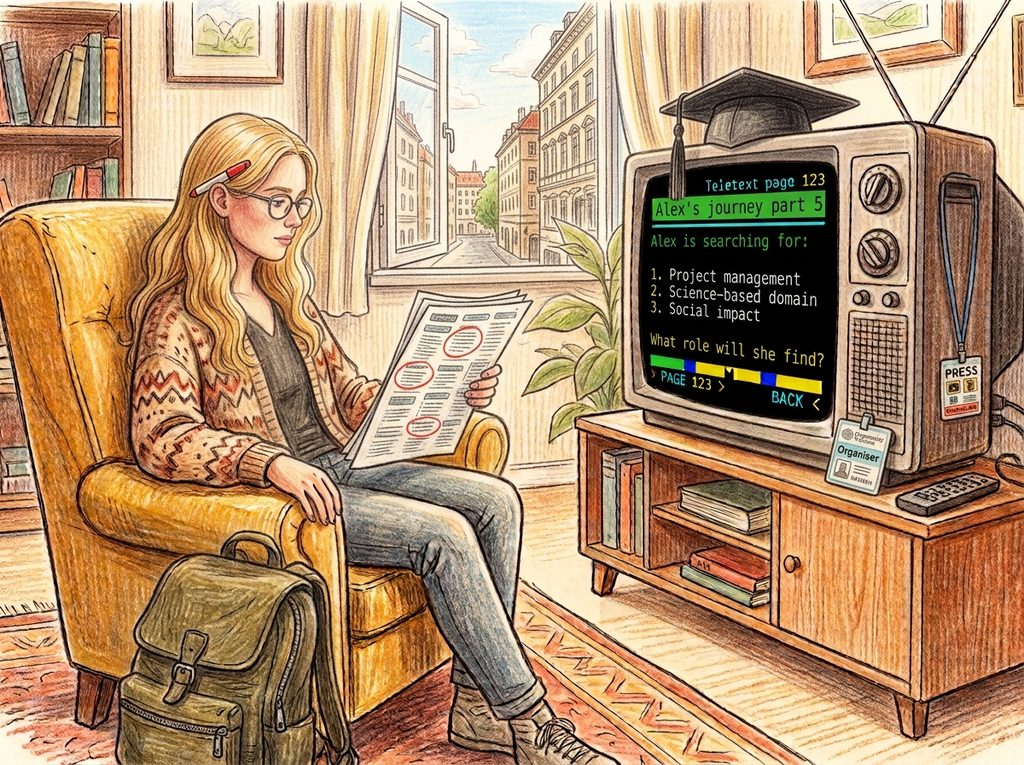
With her criteria in place, she started browsing the job platforms on her way home from university, bookmarking the interesting ones and applying on the weekends. She applied to every position that fit her criteria and that she felt she could grow into.
Don’t go for the easy options, because you will get bored. If you tick all of the boxes on the list, and you know how to do all of these things then you will be bored after a month.
Alex learned to read job ads and distinguish between the skills a position required and those that could be learned on the job. She also learned to pick up on the language and style of an advertisement and incorporate its wording into her application materials. This allowed her to translate her existing skills into the language of a given role, making them easier for employers to recognise.
Make sure you can match [the ad] as much as possible and still stay true to yourself and authentic.
The interview is a two-way street
This approach led to invitations to many interviews. Yet after most of them, Alex immediately knew that the position was not right for her. The interview for her current position of an innovation manager was different. It was the most challenging one and the chemistry was right from the start.
The interview process had two rounds: an initial meet-and-greet and a technical assessment. The assessment presented her with two challenges she might encounter in the role, forcing her to think on her feet. It gave her an opportunity to demonstrate her skills while also gaining a deeper insight into what her day-to-day work might actually look like. Her future supervisor led this part of the interview, giving her the chance to get to know him and get a sense of what working with him might be like.
She passed the interview, and the job passed her criterira as well: project management, a science-based industry and positive societal impact. Alex has found the kind of position she was looking for. Whether it becomes a lifelong career or simply the next step in her career, it is a position that ticks all three boxes she set out to find.
Day in the life of the innovation manager
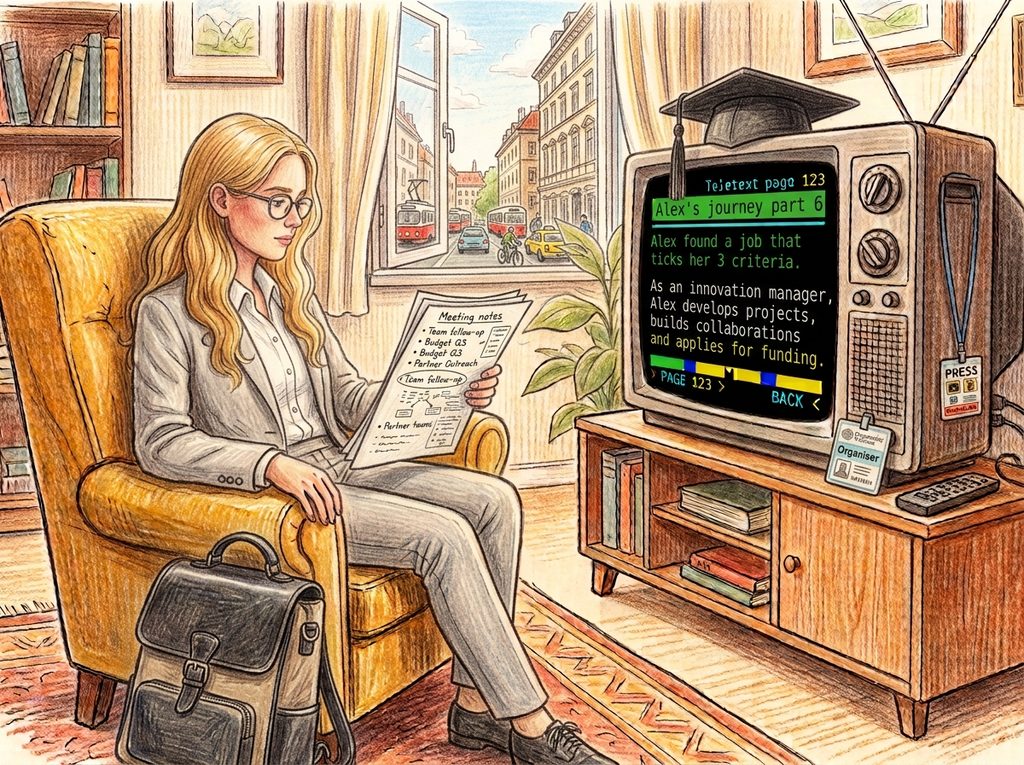
The role of an innovation manager like Alex is to find connections between a company’s mid- and long-term goals and relevant funding opportunities. Governments use funding programmes to incentivise private investment in research and development, creating opportunities for collaboration between universities and private organisations. Once she identifies a promising opportunity, Alex looks for other public and private organisations that could collaborate on a joint project. She also helps ensure that projects run smoothly and regularly presents their results at networking events and collaboration meetings.
The role draws heavily on the skills Alex identified during her PhD and wanted to develop further, from project management and networking to project development and organisation.
Conclusions: Plans change, the essentials remain
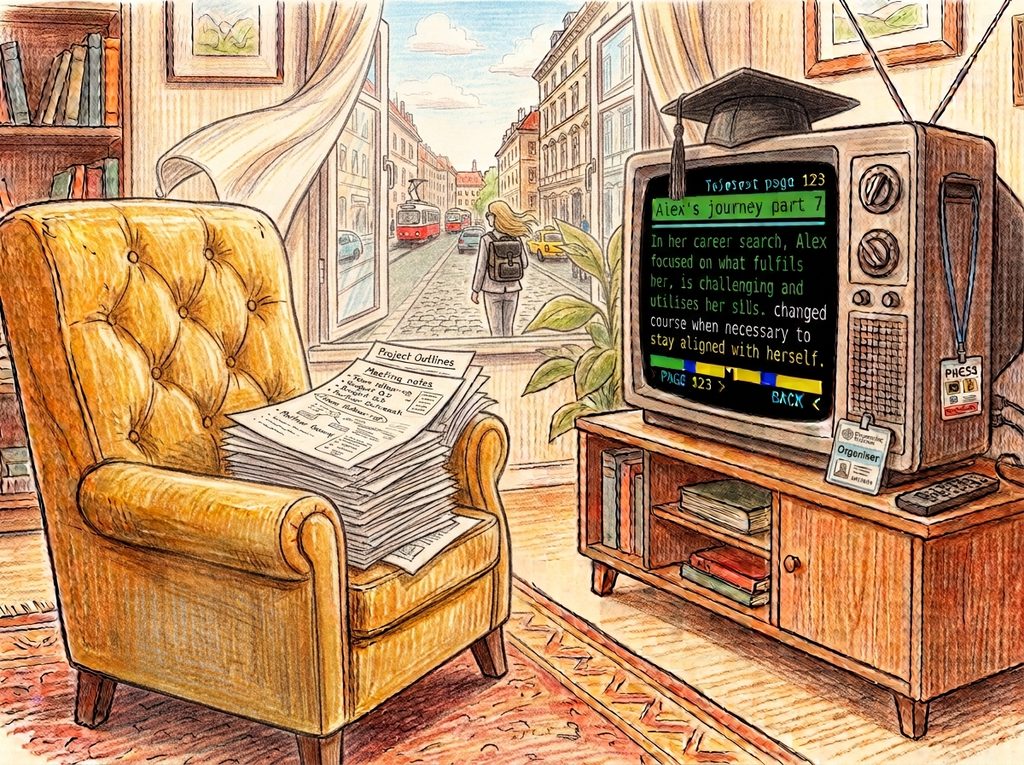
Plan D seems to have worked out for Alex. Her current position as an innovation manager at a meteorological company is both challenging and rewarding, and it builds on the strengths she identified throughout her PhD while giving her room to develop further.
What I always enjoyed the most [during my PhD] was, coming up with new questions, exploring what’s out there, talking to people and seeing where things could go.
So this was always the thing that I thought was the most creative … This creative part is something that also matches what I really liked about journalism, you know, the exploring, feeling like a little detective and going for new ideas.
Connect with Alex on LinkedIn
Visit her homepage
Contributions and AI credit
Tadeja wrote and edited the text. When polishing the rough edges, she recruited help from close 3-dimensional friends: Alice and Alina and an artificial friend: Open AI’s ChatGPT. All images, but the profile picture (copyright: Alexandra Edletzberger), were kindly generated by Google’s Gemini, with skilful prompting by yours truly.
Leave a Reply